The story
I didn't like how music was taught. So I described how I learn.
Most music instruction is memorization dressed up as lessons: here is the chord, here is where your fingers go, here is the circle of fifths — learn it. Drill apps make it worse, rewarding repetition with badges and never explaining why anything is true. I used to know theory. None of it stuck, because none of it was ever derived.
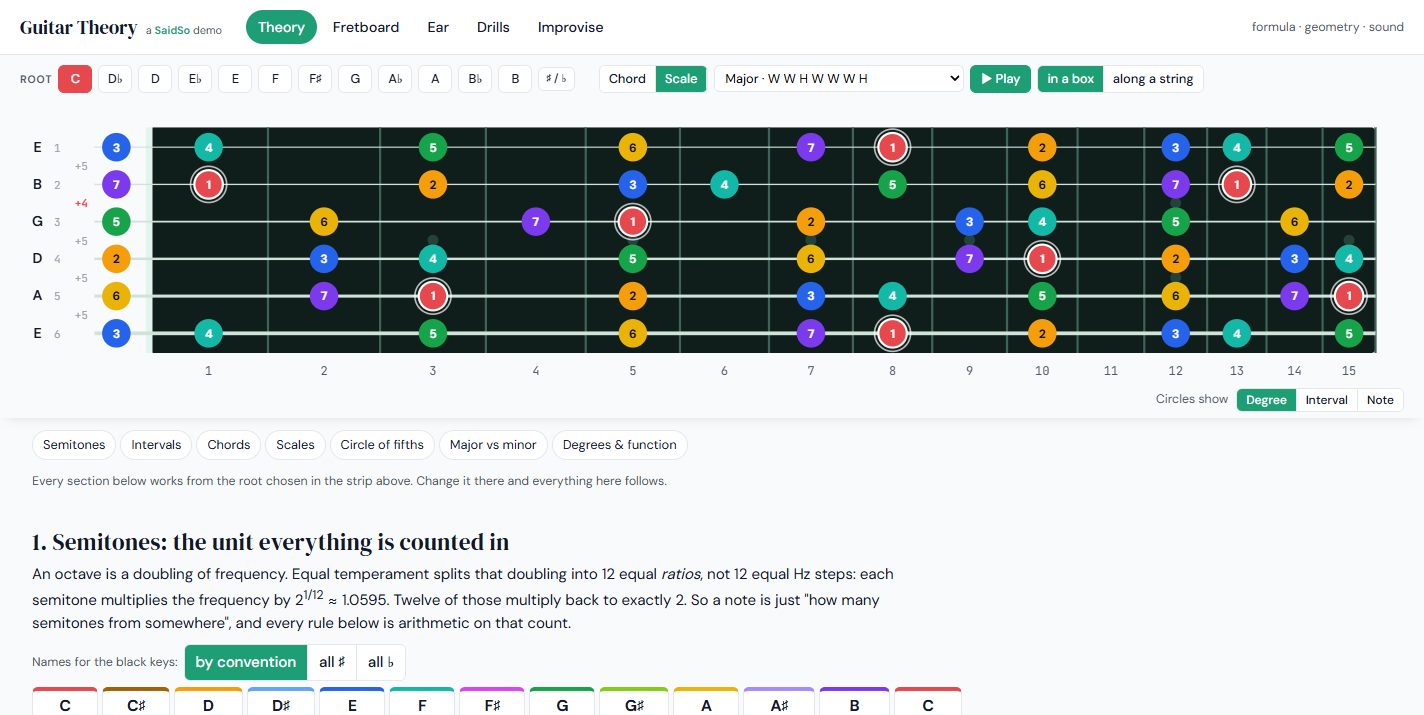
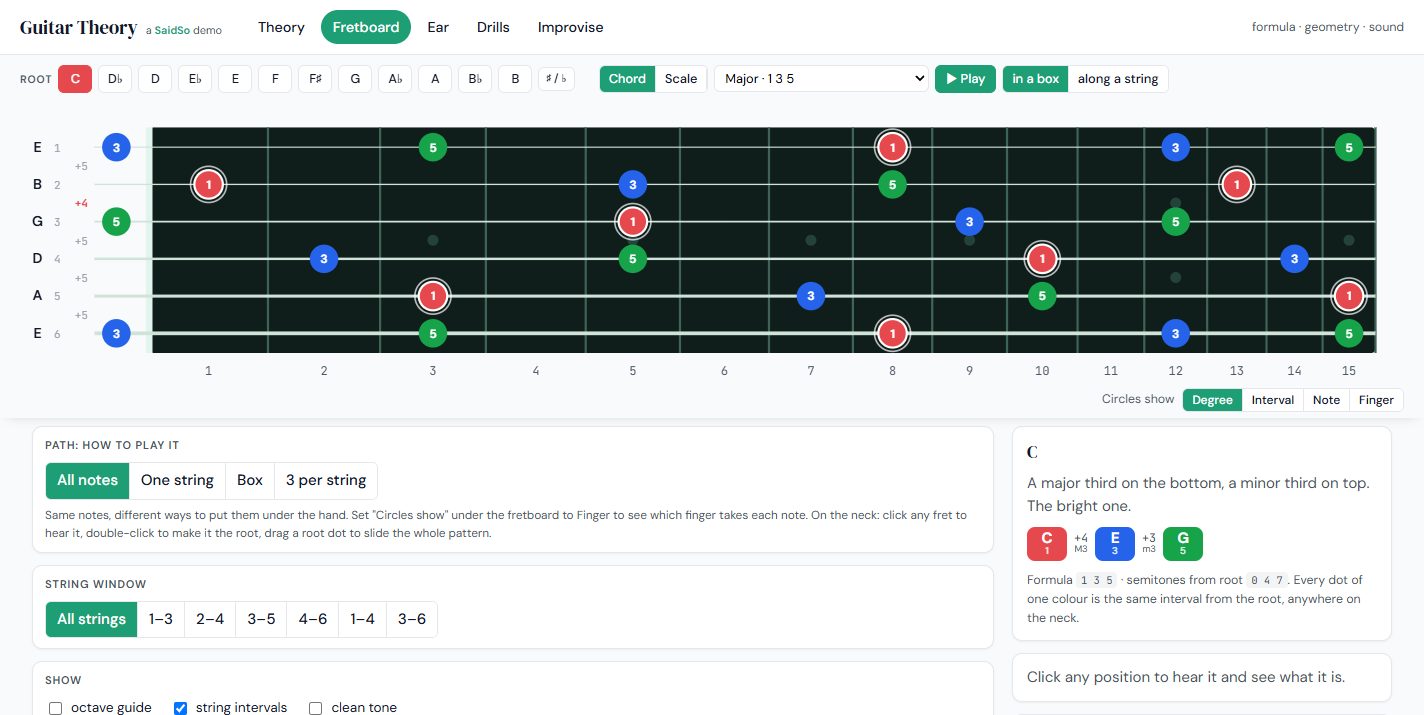
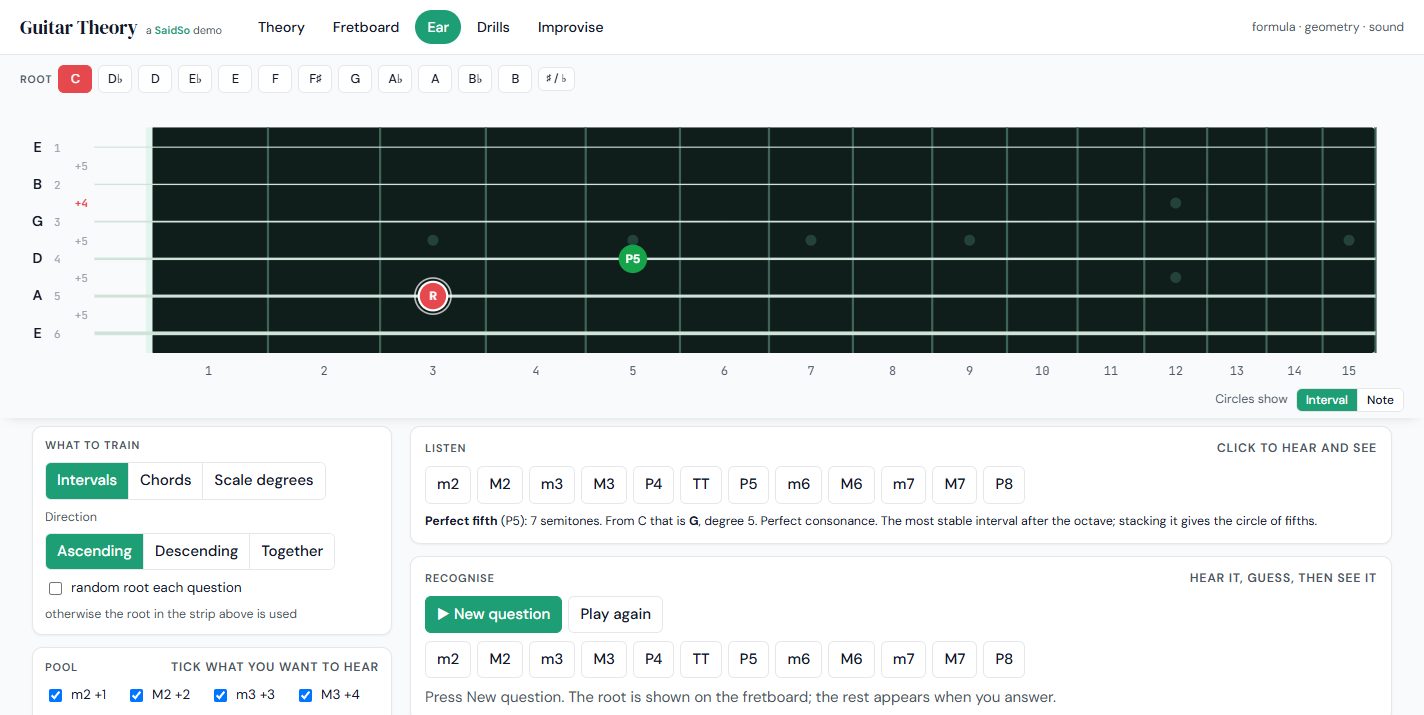
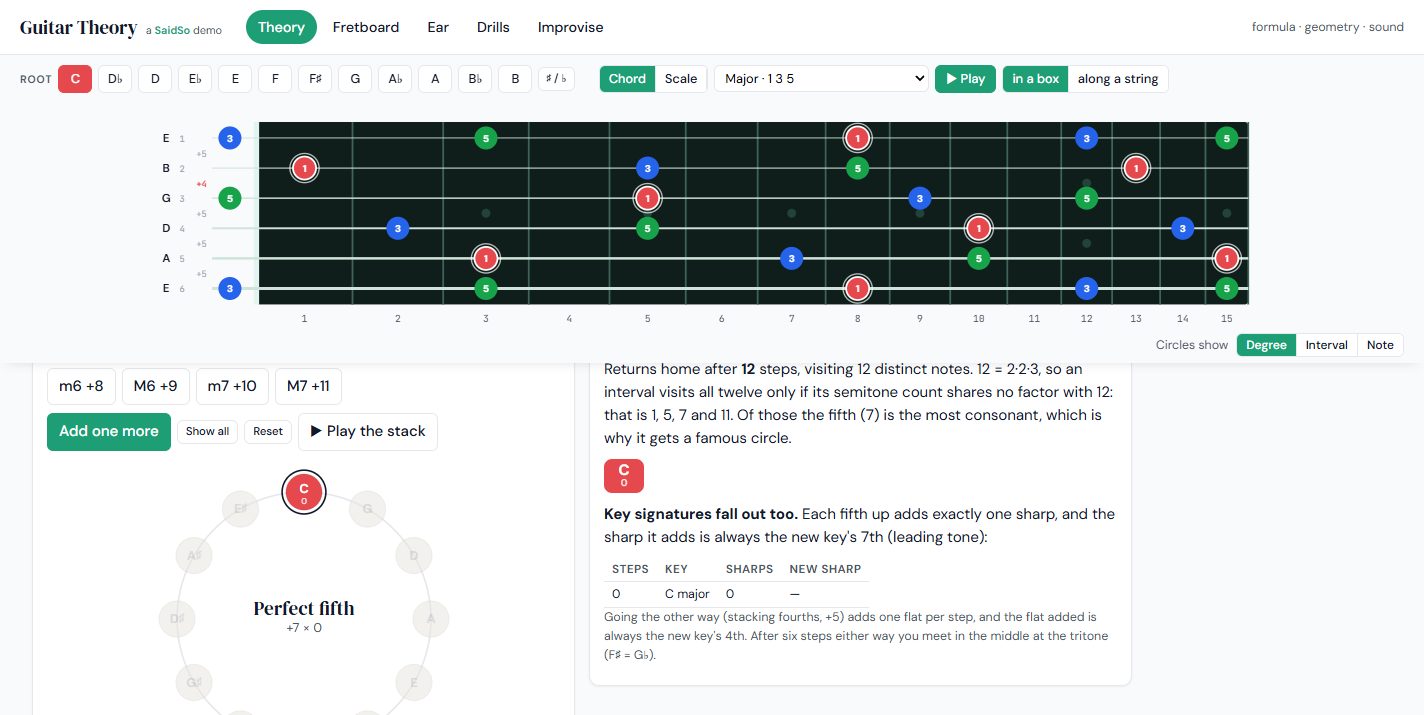
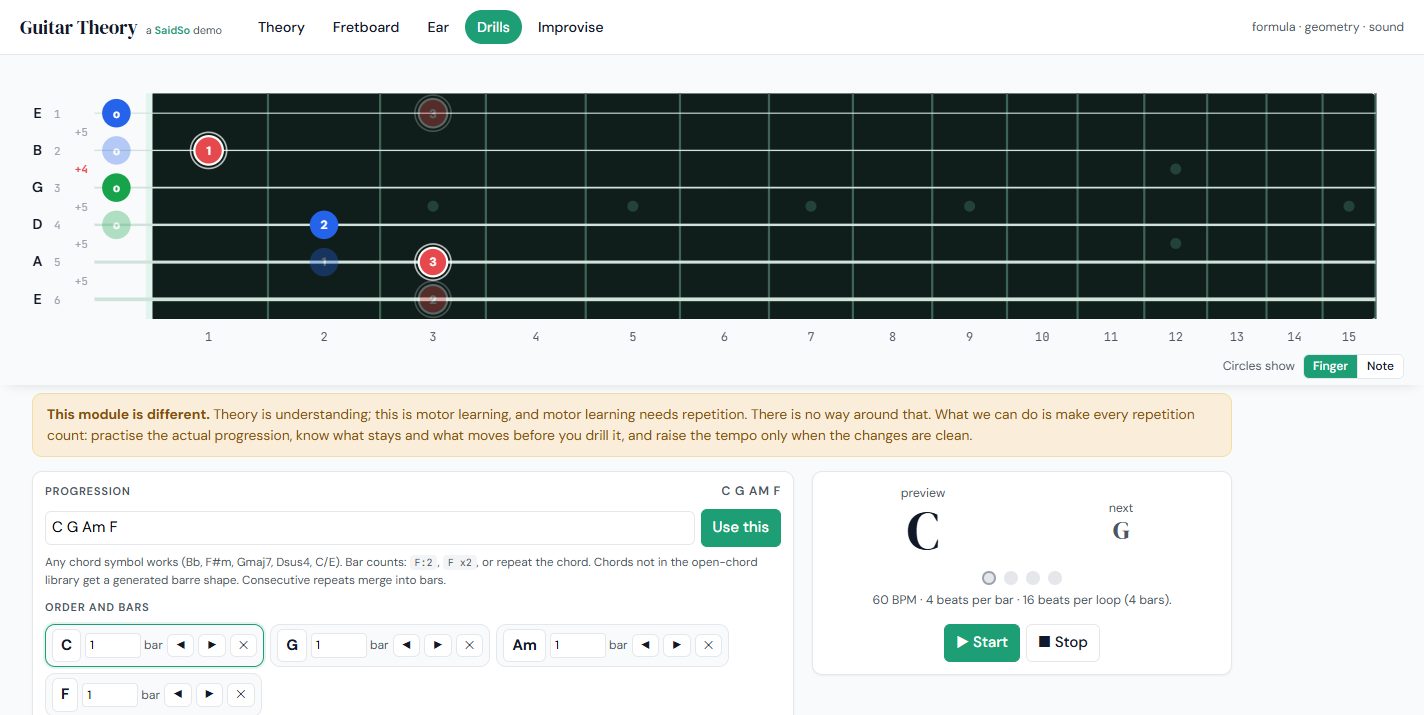
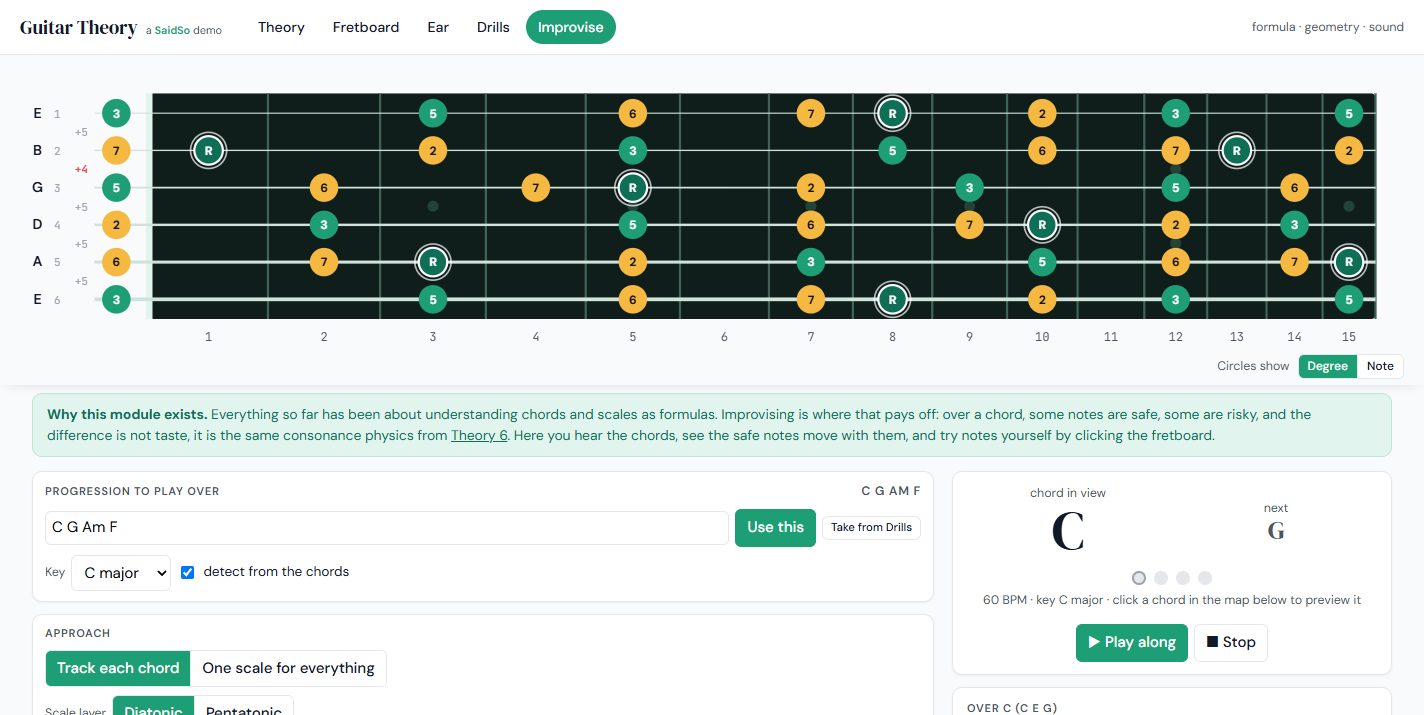
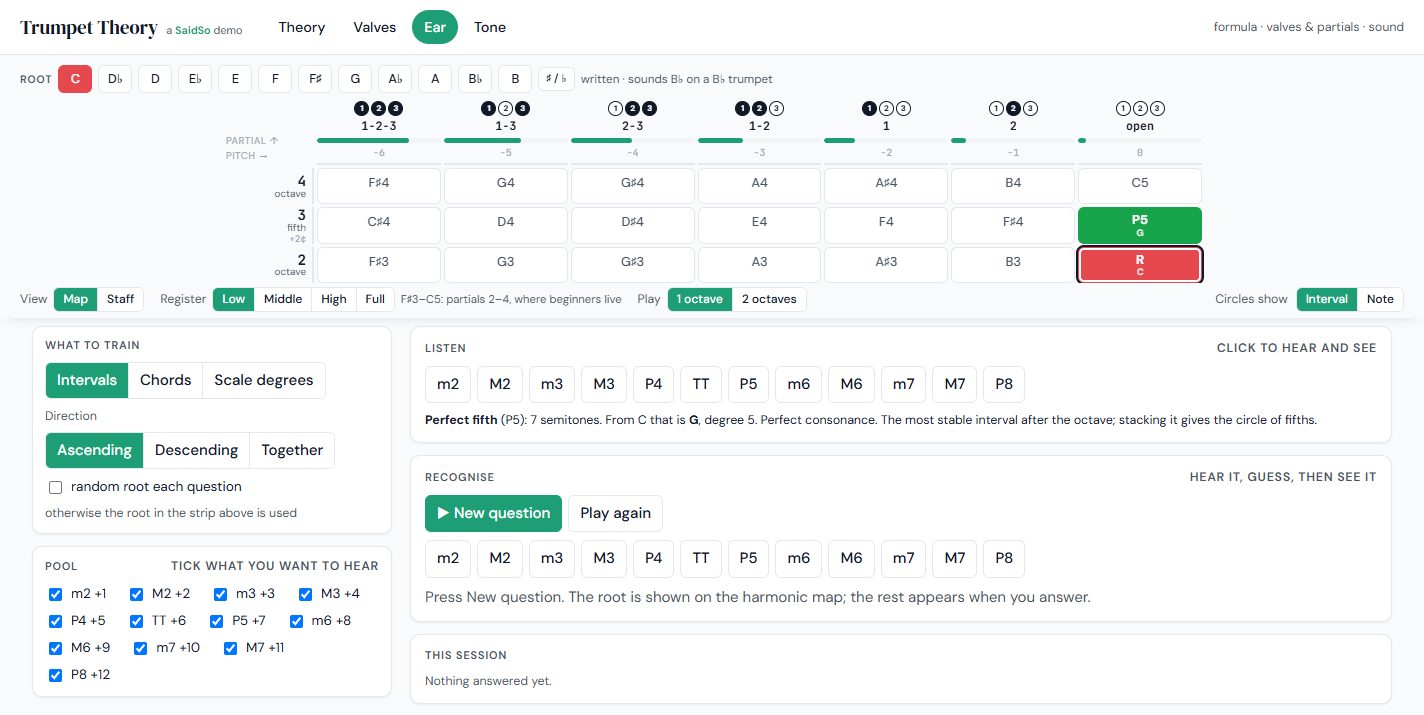
So instead of another course, I wrote down how I actually learn — the generative logic first, connected to something I already understand, shown three ways at once — and gave that brief to Claude Fable. What came back was a music-theory engine that builds every chord, scale, and key from the arithmetic of semitones, an interactive fretboard that turns each formula into geometry, and an ear trainer that lights the notes up as they sound.
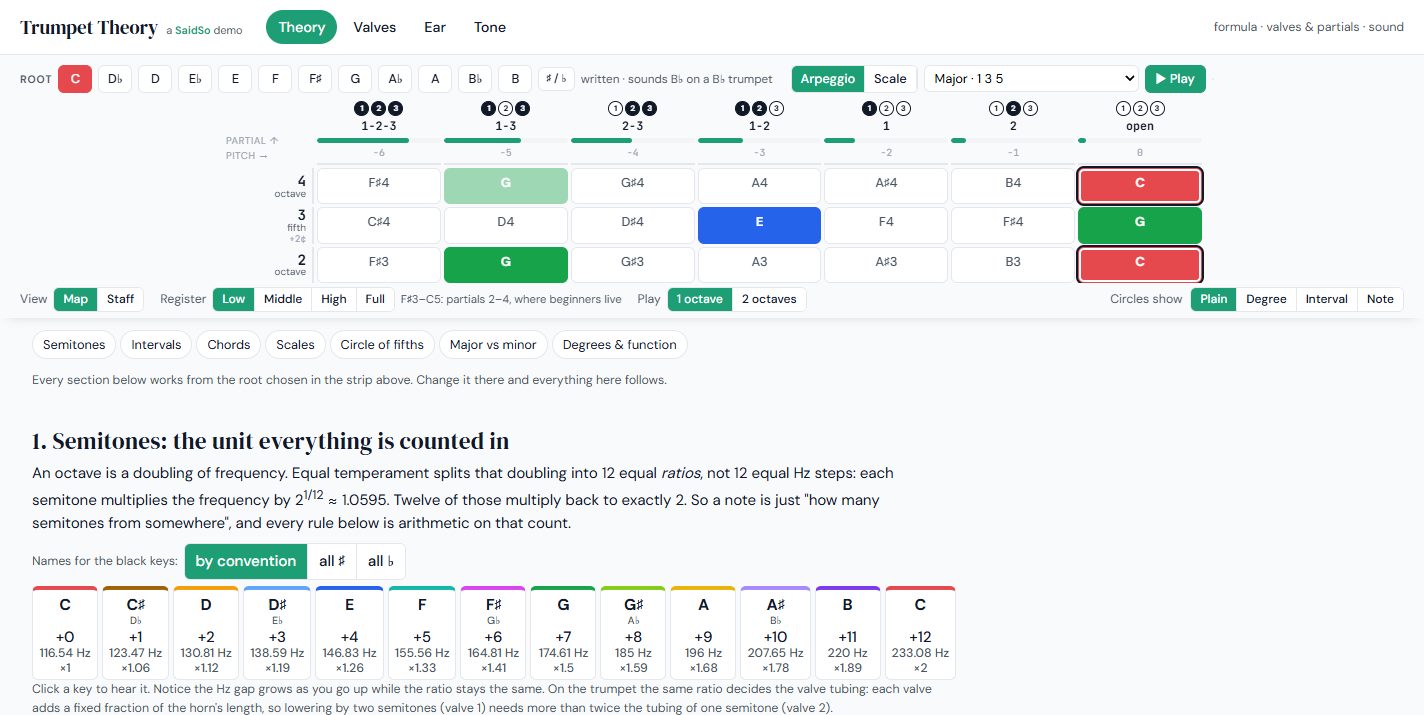
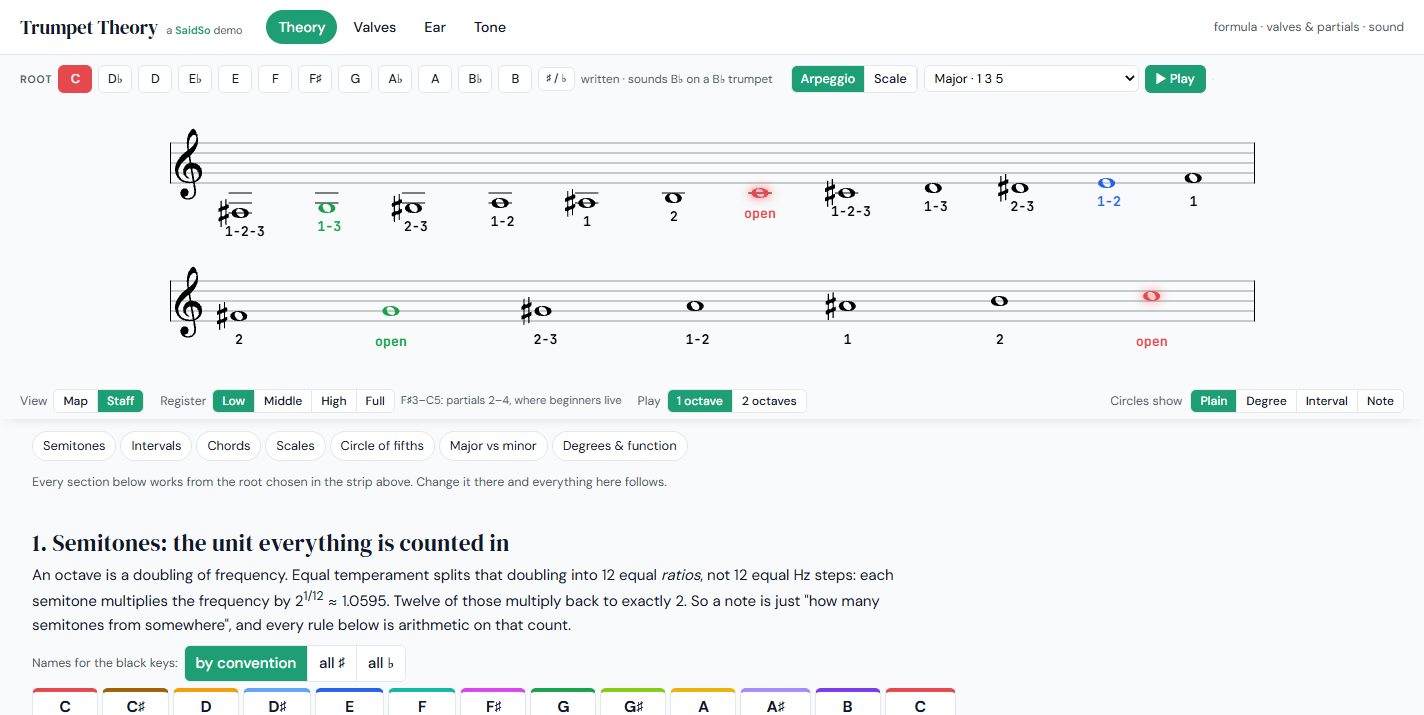
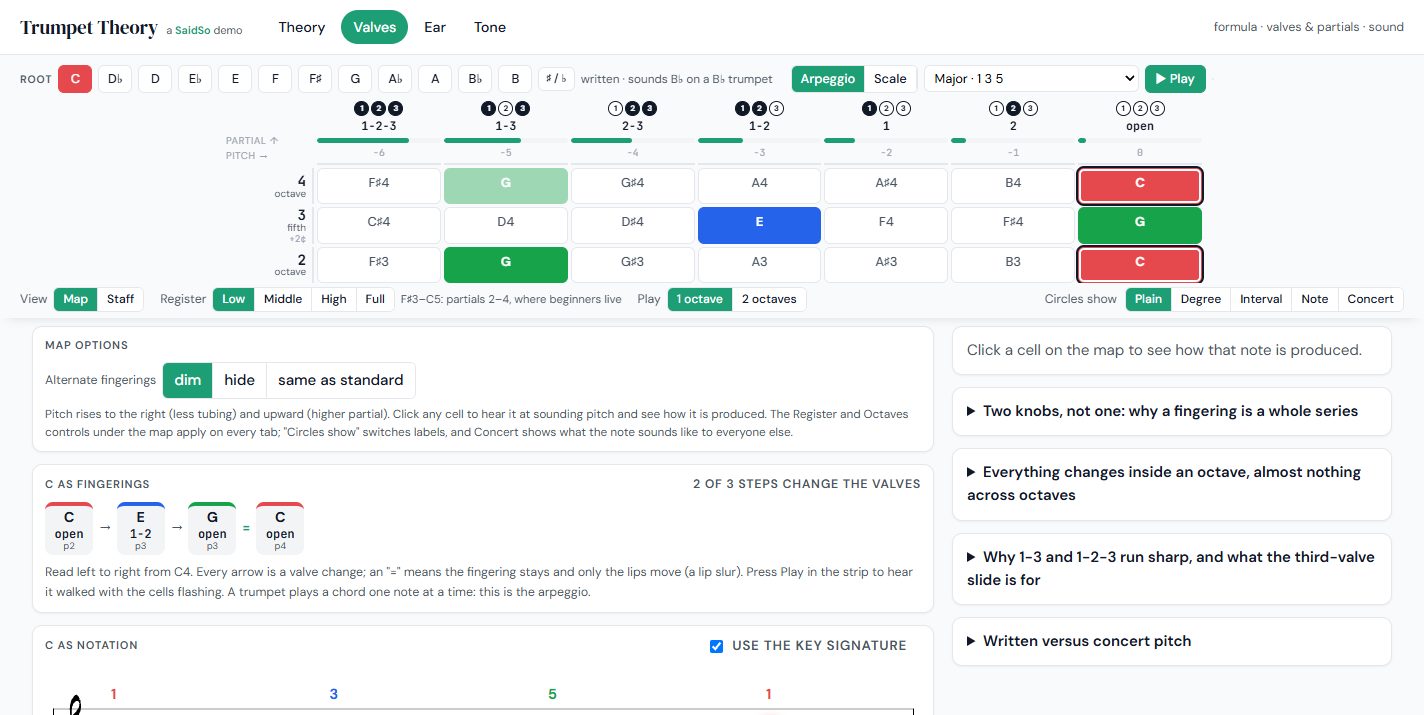
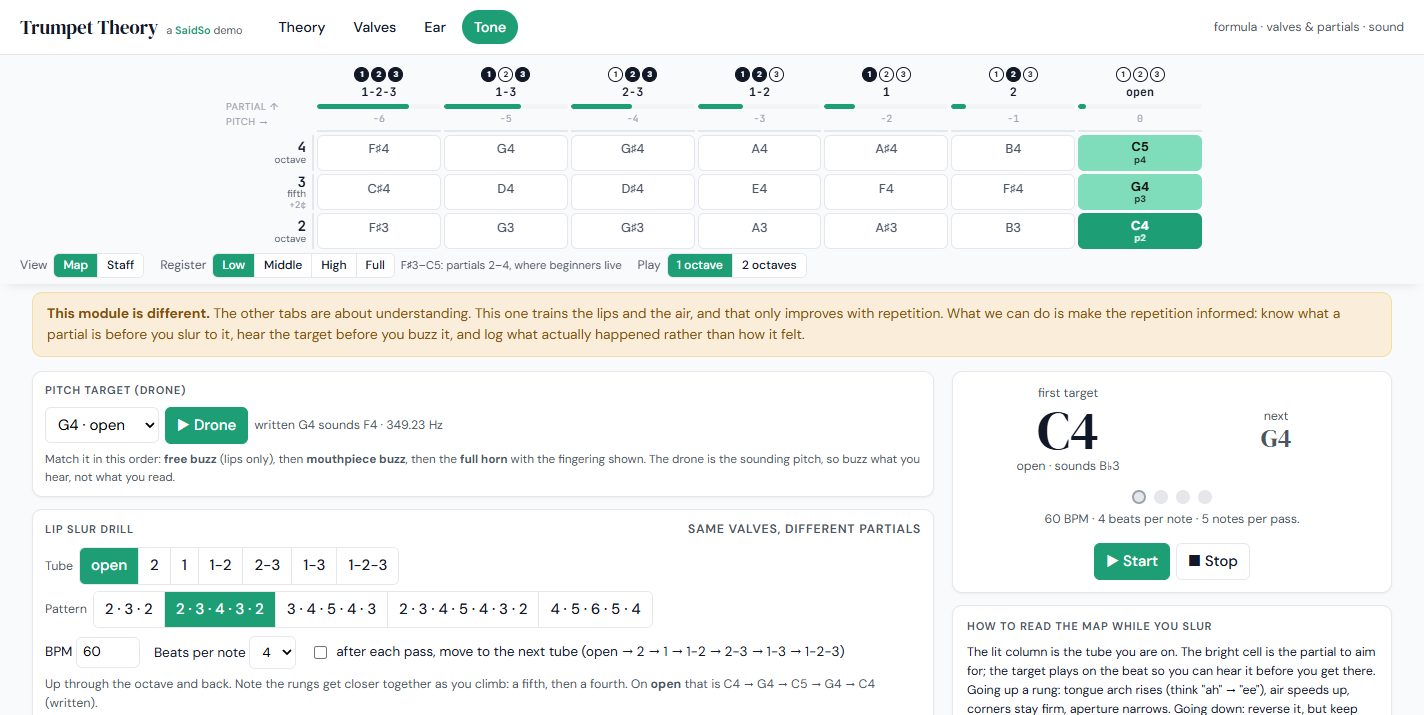
Then I pointed the same engine at a second instrument. The trumpet app derives every fingering from valve tubing and harmonic partials instead of a chart, handles the B♭ transposition, and explains from tube lengths why some fingerings run sharp. Both apps, one afternoon.
- Beginner guitarist. A handful of open chords, no muscle memory for changing between them.
- Used to know music theory. Has forgotten most of it.
- Does not learn by rote. Dislikes Duolingo-style drilling with no explanation.
- Learns from the generative logic behind a thing — the way a grammar book teaches prefixes and suffixes as building blocks, not whole words.
- Wants every concept in three modalities at once: logical, visual, auditory.
- No tabs. No “put your finger here.” No badges, streaks, or levels.